I use AI almost every day. Sometimes for work, sometimes for personal projects, and sometimes just because I'm curious about something and want to understand it better.
I'm not an AI expert, and I'm not particularly interested in becoming one. I'm a designer and a creative person who enjoys technology, photography, and figuring out how things work. I also have more interests and projects than I realistically have time for, which probably explains why AI became such a useful part of my routine.
But I don't use it to automate everything or produce as much content as possible. Most of the time, I'm simply trying to solve a problem, understand something unfamiliar, or organize my thoughts before making a decision.
My approach is fairly simple: I use AI to research, compare options, organize projects, work through ideas, and help with writing or communication. What I don't want is for it to make my decisions, replace my creative work, or become something I trust without questioning.
And the more I use it, the more I realize that knowing when to question AI is just as important as knowing what to ask it.
Researching things without getting lost in information
One of the things I enjoy most is researching technology, especially cameras. I like older equipment, and living in Japan makes that interest even more dangerous because there are so many interesting things available on the secondhand market.
The problem is that researching a camera can quickly turn into an endless collection of specifications, reviews, opinions, and comparisons. After a while, everything starts sounding either amazing or terrible, depending on who's talking.
AI helps me organize that information, but not quite in the way you might expect.
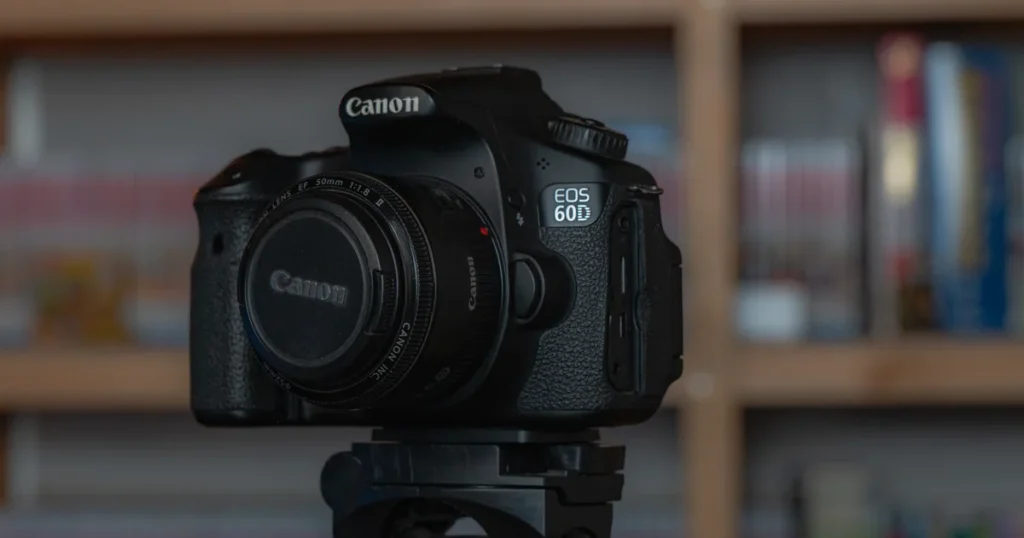
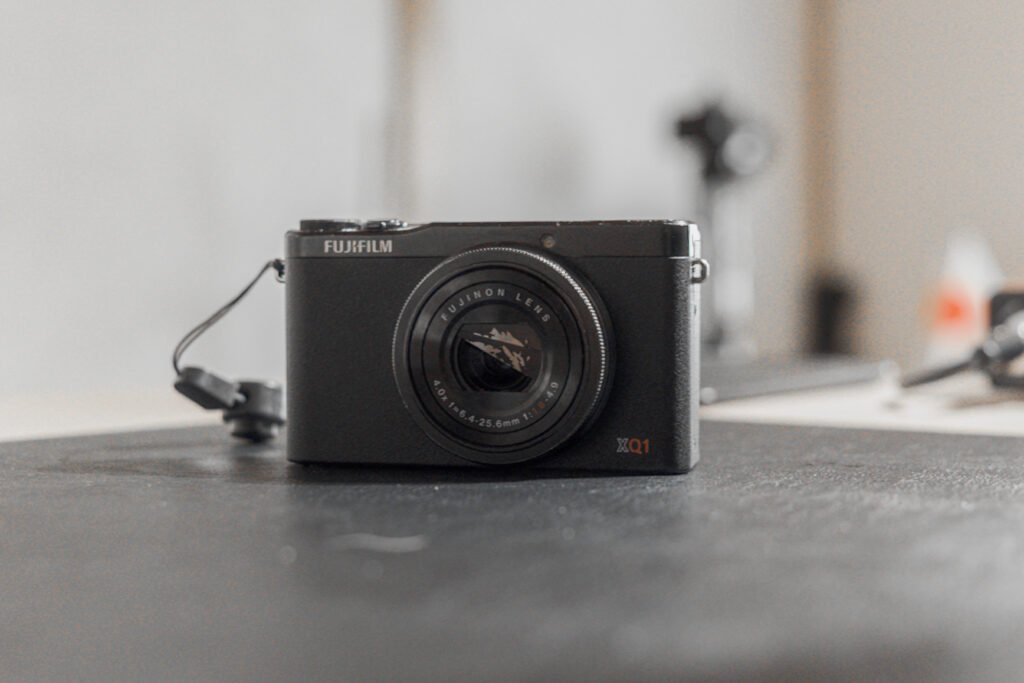
For example, I've spent a lot of time researching older cameras, including models I already own, like my Fujifilm XQ1 and Canon 60D, as well as other used cameras I might consider buying. I've also written about what it’s like to keep using my Canon 60D after fifteen years, which is a good example of why specifications don't tell the whole story.
Instead of asking something broad like "What's the best camera?", I start by explaining what I'm actually looking for.
Maybe I want something small enough to carry around every day. Maybe I'm considering a camera specifically for photography because I already have better equipment for video. Or perhaps I'm trying to understand whether an older model still makes sense compared with newer alternatives.
My budget, the equipment I already own, and the way I intend to use the camera are all part of the conversation.
Then comes the part I consider most important: questioning the recommendations.
Why are you recommending this model instead of that one? Is the autofocus really good enough? What am I sacrificing by choosing the cheaper option? Are those limitations important for what I actually photograph, or do they just look bad on paper?
Sometimes I realize that my original question wasn't even the right one.
A camera might be technically better but too large to carry comfortably. Another might have impressive specifications but cost much more than I'm willing to spend. And sometimes an older camera I already own is perfectly capable of doing what I need.
AI is useful because I can keep narrowing down the problem as I learn more.
But I don't stop there.
I still look for photographs taken with the equipment, watch people actually using it, check specifications, and compare real prices and conditions in Japanese stores. If I find something that contradicts the recommendation, I bring that information back into the conversation.
That's how I prefer to research things: use AI to organize the questions, look for evidence elsewhere, and come back with better questions.
It's not necessarily about finding the perfect answer. It's about understanding the trade-offs well enough to make a decision I'm comfortable with.
The same approach works when choosing software, comparing tools, researching something for my house, or simply trying to understand an unfamiliar subject.
Making everyday life in Japan a little easier
I've been living in Japan for several years, but my Japanese is still limited. That's something I'm actively trying to improve, although progress is not always as fast as I'd like.
In the meantime, everyday situations don't wait for me to become fluent.
There are messages to understand, products to research, websites to navigate, and situations where I need to communicate something more complicated than a simple greeting.
AI has become particularly useful here because I can explain the context behind what I'm trying to say.
For example, when I need to write a professional message in Japanese, I usually start by explaining the situation in Portuguese. I describe what I want to communicate, why I'm communicating it, and what kind of tone would be appropriate.
Sometimes I need to be respectful without sounding excessively formal. Other times I need to explain a decision clearly without making the message unnecessarily long.
A word-for-word translation isn't always enough for that.
What I need is a message that communicates my actual intention in a way that makes sense in Japanese.
So I ask AI to help, read the result, question expressions I don't understand, and make adjustments when necessary.
This doesn't always work perfectly.
I've also worked on Japanese texts that initially seemed fine but didn't sound natural when reviewed by a native speaker. That experience was a useful reminder that a grammatically plausible translation isn't necessarily good communication.
AI can help me understand and express things, but it doesn't automatically understand every cultural nuance or guarantee that a sentence sounds natural.
The same caution applies when I'm reading information.
If I encounter an unfamiliar Japanese document or something on a website, AI can help explain the terminology and identify what I should pay attention to. It can also help me formulate questions before contacting someone.
But if the information involves contracts, money, legal requirements, or anything with serious consequences, I want to verify it through an appropriate source.
For someone living in a country where the language is still a challenge, this kind of assistance makes a real difference.
It doesn't eliminate the need to learn Japanese. If anything, it often makes me more aware of what I still need to learn.
What it does is make certain everyday situations more manageable while I'm getting there.
Turning a collection of ideas into an actual project
Another area where AI helps me considerably is organizing projects.
I have a habit of becoming interested in several things at once. Technology, photography, design, video, software, renovating my house, building websites, and developing business ideas are all things that occupy space in my head.
Having ideas isn't usually the problem. Figuring out which ones deserve attention, what needs to happen first, and what I should probably leave alone for now is much harder.
My personal website is a good example.
I wanted to build something around my experiences living in Japan, but I didn't want it to become just another blog about Japanese culture or tourist destinations.
I also didn't want to abandon my other interests simply because they didn't fit neatly into one category.
That meant thinking through questions about positioning, content, audience, SEO, site structure, and how my different projects might eventually connect.
AI helped me work through those questions, compare approaches, and organize the decisions into something manageable.
But something interesting happened during that process.
The more we discussed what the site could eventually become, the easier it was to keep adding features, categories, plugins, and systems that might be useful someday.
At some point, I had to question whether all that planning was actually helping me move forward.
The website was already working. I didn't need another complicated system. I needed to publish articles.
So the priority changed from building infrastructure to producing content.
AI can be surprisingly good at helping you plan things you don't actually need to do yet.
It can generate a detailed strategy, a complicated workflow, or an impressive list of improvements. That doesn't mean implementing all of them is a good idea.
Sometimes the most useful question I can ask is:
"Do I really need to do this now?"
I use AI to help identify dependencies, compare priorities, and understand the consequences of different choices. But I still have to decide what matters enough to deserve my limited time.
The goal isn't to create the most elaborate plan. It's to make progress on something real.
Using AI to write without losing my voice
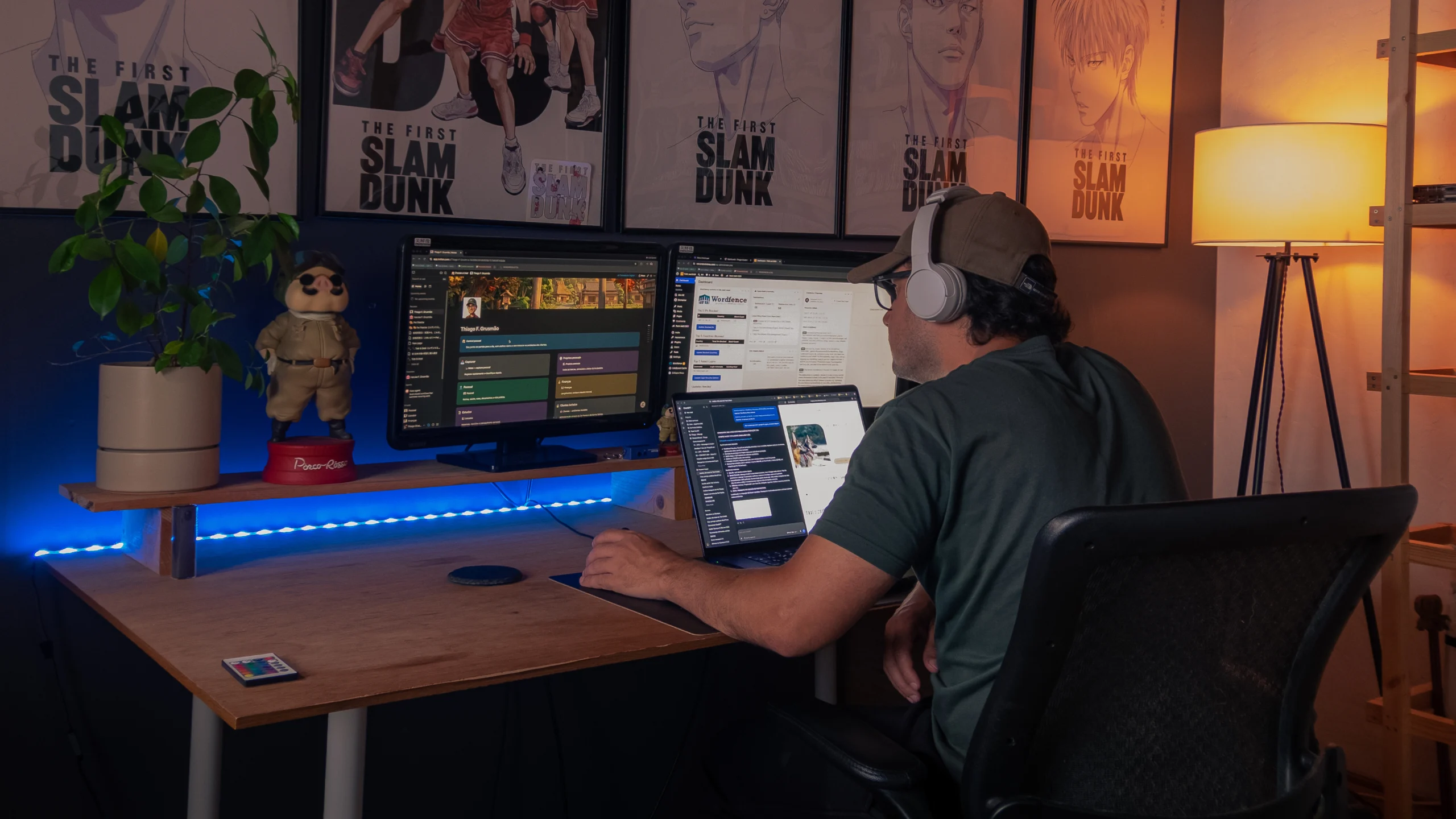
Writing is another area where AI has become part of my workflow, especially because I'm publishing articles in English even though Portuguese is my first language.
I have ideas, opinions, and experiences I want to share, but turning them into a clear article isn't always straightforward.
Sometimes I know exactly what I want to say but struggle with the structure. Other times I have several connected ideas and can't decide which one should come first.
That's where I find AI useful.
I can explain what I'm thinking, discuss how the article should develop, and ask for help organizing the material.
But I don't want the result to sound like a corporate blog or one of those articles that could have been written by absolutely anyone.
That has actually been one of the more difficult parts of using AI for writing.
AI is often very good at producing sentences that sound polished. The problem is that polished doesn't always mean natural, interesting, or personal.
Sometimes it turns a simple observation into a dramatic statement. Sometimes it repeats the same idea in different words. And sometimes it divides everything into tiny paragraphs that make an article feel more like a motivational speech.
I've noticed all of those problems while working on my own content.
That's why I spend time questioning the writing itself.
Does this sound like something I would say? Is this paragraph actually explaining anything? Are we repeating a point the reader already understood? Is this an experience I really had, or did the AI fill in a detail that sounds plausible?
I also like reading the text aloud. It's a surprisingly effective way to notice when something sounds unnatural or when the rhythm doesn't work.
And there is another rule I try to follow: AI can help me communicate an experience, but it shouldn't invent the experience.
If I researched a camera but never bought it, the article shouldn't suggest that I tested it. If I planned a renovation but haven't completed that part of the work, I shouldn't write as though I already know the result.
That might sound obvious, but it's easy for an AI-generated draft to turn an intention into an accomplishment if nobody checks it carefully.
For me, the value of a personal website comes from the fact that there's an actual person behind the experiences, opinions, photographs, and decisions.
I don't want to lose that just to publish faster.
Sometimes the best use of AI is knowing when to stop using it
I recently ran into a situation that made this particularly clear.
I was updating photographs for an article on my website. The task was simple enough: prepare two images, convert them from JPEG to WebP, upload them to WordPress, and replace the photographs in the post.
I was using an AI agent to help with the process.
The problem was that the agent kept running into restrictions when trying to handle the files and upload them. Instead of completing the task, it was getting stuck, trying different approaches, and consuming credits along the way.
At that point, I had to ask myself why I was using AI for something I could do faster with tools I already knew how to use.
I've worked with Photoshop for years. Converting an image to WebP isn't difficult for me.
The more sensible approach was to prepare the files myself, upload them directly to the WordPress Media Library, and leave only the remaining website changes for the AI agent.
That experience reminded me of something I think is easy to overlook when using these tools.
Automation isn't automatically more efficient.
There is a difference between a task being technically possible for AI and that task being worth delegating.
If explaining the task, supervising the agent, correcting mistakes, and dealing with restrictions takes longer than doing it myself, then I'm not really saving time.
I'm just moving the work somewhere else, sometimes making it more expensive in the process.
I still find AI agents incredibly useful for certain jobs, particularly when they involve researching information, organizing material, or performing a sequence of tasks that would otherwise require a lot of repetitive work.
But I don't need an AI agent to do everything.
I want to use the right tool for the problem, even when that tool is simply Photoshop and a few minutes of my own time.
Where I draw the line with creative work
My background is in visual arts, illustration, and design, so the relationship between AI and creative work is something I think about quite a bit.
I'm not against using AI during a creative process. It can help explore ideas, analyze alternatives, organize references, or work through a problem when I'm not sure which direction to take.
I can see the value in that.
But I also think there's a difference between using AI to support a creative process and allowing it to replace the part that makes the work personal.
Photography is probably the clearest example for me.
I live in a relatively quiet part of Japan, and there are things about everyday life here that I want to document. The streets, the houses, the landscapes, the equipment I use, my dogs, and the slow process of renovating an old house are all part of that.
If I'm writing about my house, I want the photographs to show my actual house.
If I'm reviewing an old camera, I want readers to see photographs taken with that camera.
And if I'm documenting a particular moment in my life, I want the image to come from that moment.
An AI-generated image might look more impressive, but that isn't necessarily the point.
In those situations, the photograph isn't just decoration. It's part of the experience I'm sharing, and sometimes it's also evidence of what I'm describing.
The same principle matters to me with illustration. I can use technology to support my creative process without wanting it to make every creative decision for me.
I don't believe that every use of AI in creative work is automatically wrong, and I don't expect everyone to establish the same boundaries.
These are simply the ones that make sense for the kind of work I want to create.
More broadly, I don't want to outsource my judgment.
AI can provide information, identify alternatives, challenge an idea, and help me see something I missed. But it doesn't have to live with the consequences of my decisions.
If I buy the wrong camera, I'm the one who spent the money. If I follow bad advice on my house, I'm the one dealing with the problem. And if I publish something inaccurate, my name is attached to it.
That responsibility doesn't disappear just because an AI helped somewhere along the way.
What I've actually learned from using AI every day
After using AI across so many different parts of my life, I don't think its biggest advantage is simply making things faster.
For me, the real benefit is being able to approach problems that might otherwise feel too complicated, unfamiliar, or time-consuming to begin.
It helps me organize information before making a purchase, communicate more clearly in a language I'm still learning, turn scattered ideas into manageable projects, and improve my writing without having to figure out every detail on my own.
But it also requires a certain amount of skepticism.
I've received recommendations that didn't respect my budget, answers that missed important context, Japanese wording that needed more work, and suggestions that would have made relatively simple tasks unnecessarily complicated.
Those aren't reasons for me to stop using AI. They're reasons to pay attention to how I use it.
If you're trying to find a useful place for AI in your own routine, I think the best starting point is a problem you already have.
Describe what you're trying to accomplish, what you've tried, what you know, and what limitations you're working with. Give it enough context to understand your situation, then ask it to help you explore the options.
Don't worry too much about writing a perfect prompt.
Instead, pay attention to the conversation that follows. Ask why something was recommended, question the assumptions, and look for information that could change the answer.
If the decision matters, verify the important details somewhere reliable. If the task is easier to do yourself, do it yourself.
And if you're using AI for creative work, decide which parts of the process you actually want to keep in your own hands.
That's essentially how I approach it.
I don't need AI to replace my curiosity, creativity, or ability to make decisions. Those are the things I want to spend more time on.
What I want is a tool that helps me get past the confusion, organize what matters, and reach the point where I can do something useful.
And perhaps the most important habit I've developed is remembering that the first answer doesn’t have to be the final answer.
Sometimes the real value comes from what happens after I question it.