15 years, three countries, and one old camera that refuses to retire
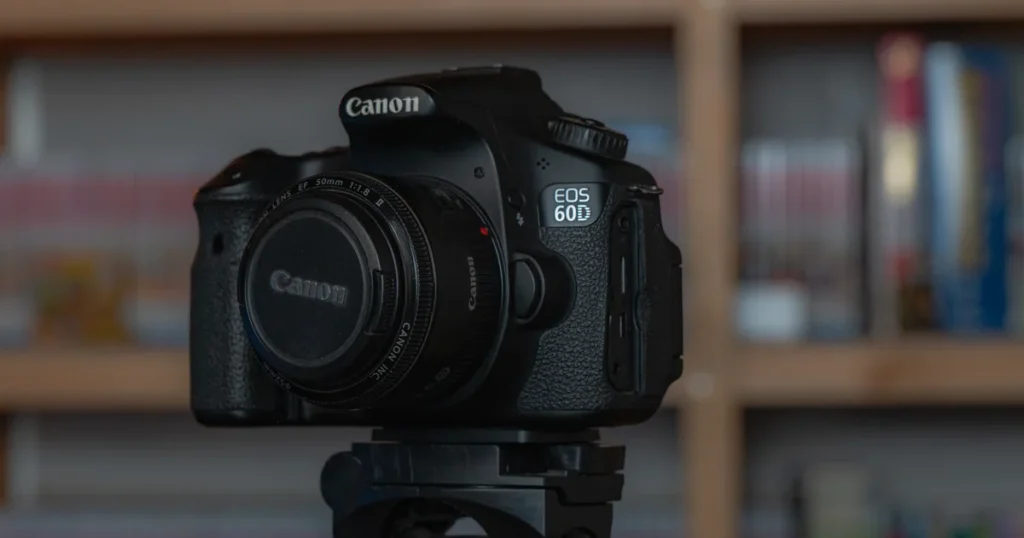
My Canon 60D is old.
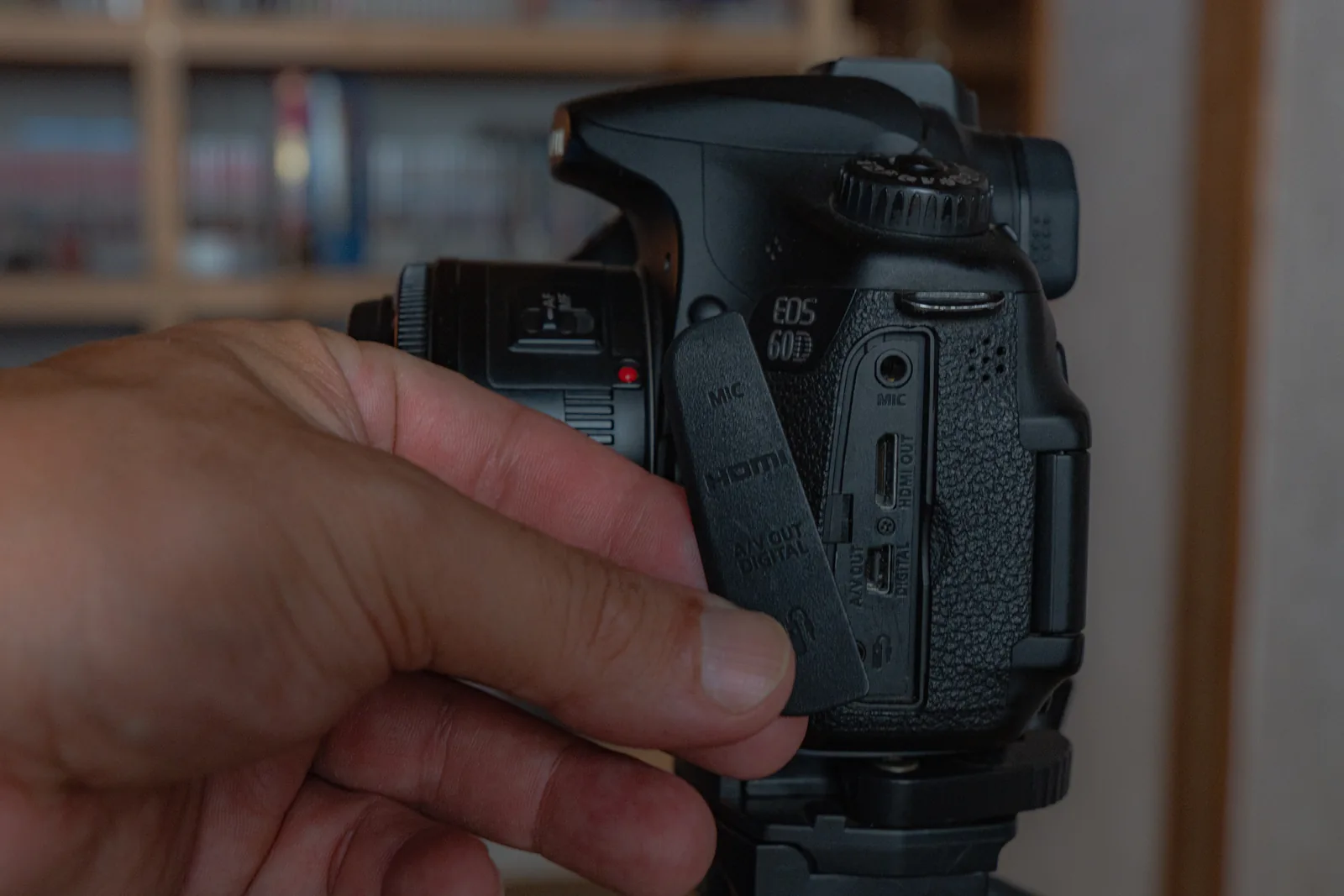
Some of the rubber has dried out. The articulating screen still works, but when I rotate it toward myself, the image no longer follows and ends up upside down. Autofocus through the LCD is painfully slow, low light exposes its age very quickly, and nine autofocus points feel almost comical beside a modern mirrorless camera.
And yet, in 2026, it is still sitting on a tripod in my studio, ready to work.
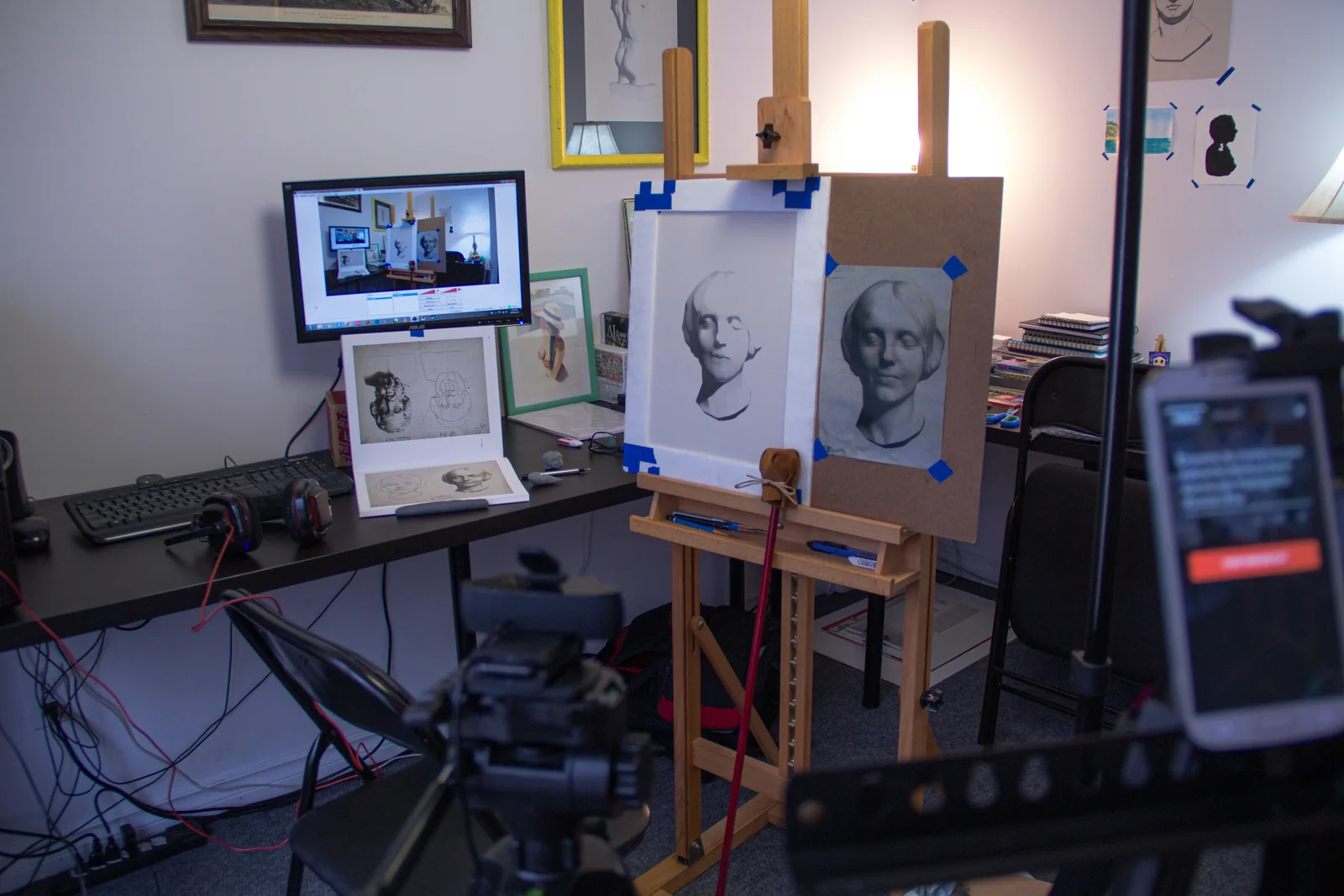
I bought it in 2011. Since then, it has moved with me from Brazil to Canada and then to Japan. It started as a tool for drawing references, became the camera I learned photography with, recorded tutorials and classes, and is now about to become the fixed camera for my YouTube studio.
Would I buy another Canon 60D if this one died tomorrow? Probably not.
Would I recommend buying one today? Under the right circumstances, yes.
That contradiction is probably the best place to start.
The Canon 60D in 2026 is worth it as a cheap way to learn manual photography, if you find one at a good price. It's not worth it if you care about video, fast-moving subjects or low light.
I didn't buy it to become a photographer
Photography wasn't really the plan.
Around 2006, when I was 19, I had a Sony Cyber-shot DSC-W50. I knew almost nothing about photography. It was simply a small digital camera I owned.
A few years later, I was studying artists like Frank Frazetta, Boris Vallejo, Donato Giancola and Dan Dos Santos. What caught my attention wasn't only the finished paintings and illustrations. I became fascinated by what happened before the final image: references, poses, lighting, composition and all the preparation behind the work.
Photography suddenly looked useful in a completely different way. I wanted to photograph people posing, objects, lighting and scenes that I could later use as reference for drawing and illustration.
I still didn't know much about cameras, but I knew I wanted manual controls and interchangeable lenses. Why those two things seemed so important to me at the time, I couldn't really explain. I just wanted more control.
So I researched cameras the best way I could on the internet in 2011. I remember looking at Nikon models, including the D5100, and eventually ended up choosing the Canon 60D.
There was no sophisticated technical analysis behind the decision. I wasn't comparing sensor charts or autofocus systems. I saw a large camera covered in buttons and settings, with a screen that could rotate, and instead of finding all of that intimidating, I got excited.
I've always liked computers, hardware, settings and things with too many buttons. The 60D looked like something I could explore.
I bought it new on Mercado Livre in Brazil for a little over R$3,000, including the 18–135mm kit lens. Compared with the Cyber-shot, it felt enormous.
And that was exactly what I wanted.
Then I started learning what all those buttons did
At the time, I was dating someone who studied photography. She used a Nikon D90, and we started going out to take pictures together.
That changed my relationship with the camera. I still used the 60D for drawing references, but photography itself became interesting. I learned aperture, shutter speed, ISO, exposure and focus mostly by using the camera and spending time with someone who understood those things better than I did.
By 2012, I was photographing a lot. Not professionally. I've never really thought of myself as a photographer. Photography simply became another visual tool and another thing I enjoyed doing.
Then, at the end of 2012, I moved to Canada.
The camera came with me, and its job started changing again.
From drawing references to video
Around 2013, I began using the 60D for tutorials and videos.
Over the following years, I also started watching more photography and filmmaking content online. Peter McKinnon was one of the creators who opened that world for me, along with Casey Neistat's New York vlogs.
I didn't suddenly decide I was going to become a filmmaker. What changed was my perception of what a camera could do. I started noticing lenses, focal lengths, different styles of shooting and all the possibilities that existed beyond the way I had originally been using the 60D.
I also discovered that lenses were expensive. Very expensive.
So despite owning the camera for fifteen years, I never became someone with a shelf full of glass. I basically used three lenses:
- The original 18–135mm kit lens.
- A Canon 50mm f/1.8, which I bought before leaving Brazil and took with me to Canada.
- A Canon EF-S 10–18mm, bought later, already living in Japan.
That last lens was bought for a very practical reason: space. Rooms in Japan can be small, and when you're recording yourself indoors, a wider lens gives you breathing room without requiring the camera to be halfway through the opposite wall.
A few years after Canada, I moved again, this time to Japan. By 2017, I was using the same 60D to record classes while working as a drawing and illustration teacher. At some point my setup included the camera, the 10–18mm, an Audio-Technica AT2020 and a Focusrite audio interface.
The camera I originally bought to create references for drawing was now recording me teaching drawing.
I like that circle.
Where the 60D feels old
For a long time, I never felt a strong need to replace it. I understood fairly early that changing camera bodies didn't automatically transform your photography. Lenses often mattered more, and good lenses could cost as much as, or more than, the body itself.
So I kept using what I had. Eventually, though, one weakness became impossible to ignore.
Autofocus.
I have two German Shepherds, and trying to photograph fast-moving dogs with the 60D makes fifteen years of camera development very obvious. Through the rear LCD, autofocus is extremely slow. Using the optical viewfinder is dramatically better, and the camera becomes responsive enough that I can still photograph comfortably. But once the subject starts moving unpredictably, there is no pretending it performs like a modern mirrorless camera.
That was one of the main reasons I eventually bought a Sony a6700 with a Tamron 17–70mm f/2.8. I didn't sell the Canon to replace it. I added the Sony because my needs had changed.
Low light is another weak point. My personal comfort limit with the 60D is around ISO 1600. I can go higher, but the noise quickly becomes more aggressive than I want. With the a6700, ISO 1600 barely feels like a problem.
Then there are all the conveniences that didn't exist when the 60D was designed: only nine autofocus points, no touchscreen, no subject recognition and no sophisticated tracking.
Video makes the difference even more obvious. The 60D can record Full HD, but there is no 4K, no modern video autofocus and no log profile. If someone asked me for a camera primarily for video in 2026, the 60D wouldn't be my recommendation.
But photography is a different story.
For still photography, I still enjoy it a lot
Put a lens on the 60D, look through the optical viewfinder and take pictures. The experience is still genuinely good.
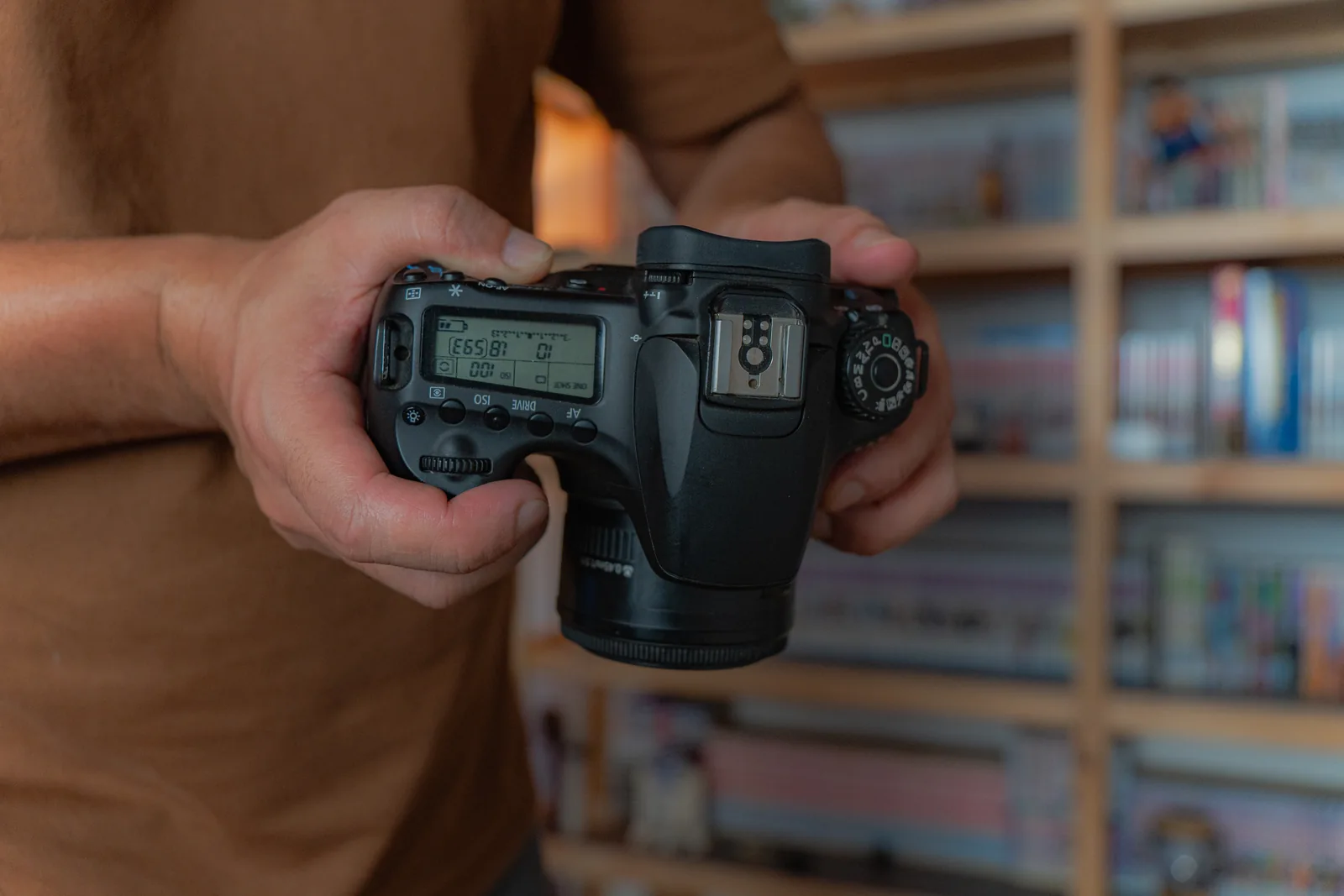
The body is large and heavier than modern mirrorless cameras, but it is extremely comfortable to hold. The grip is excellent, the buttons are well positioned, and the camera just feels good in the hand.
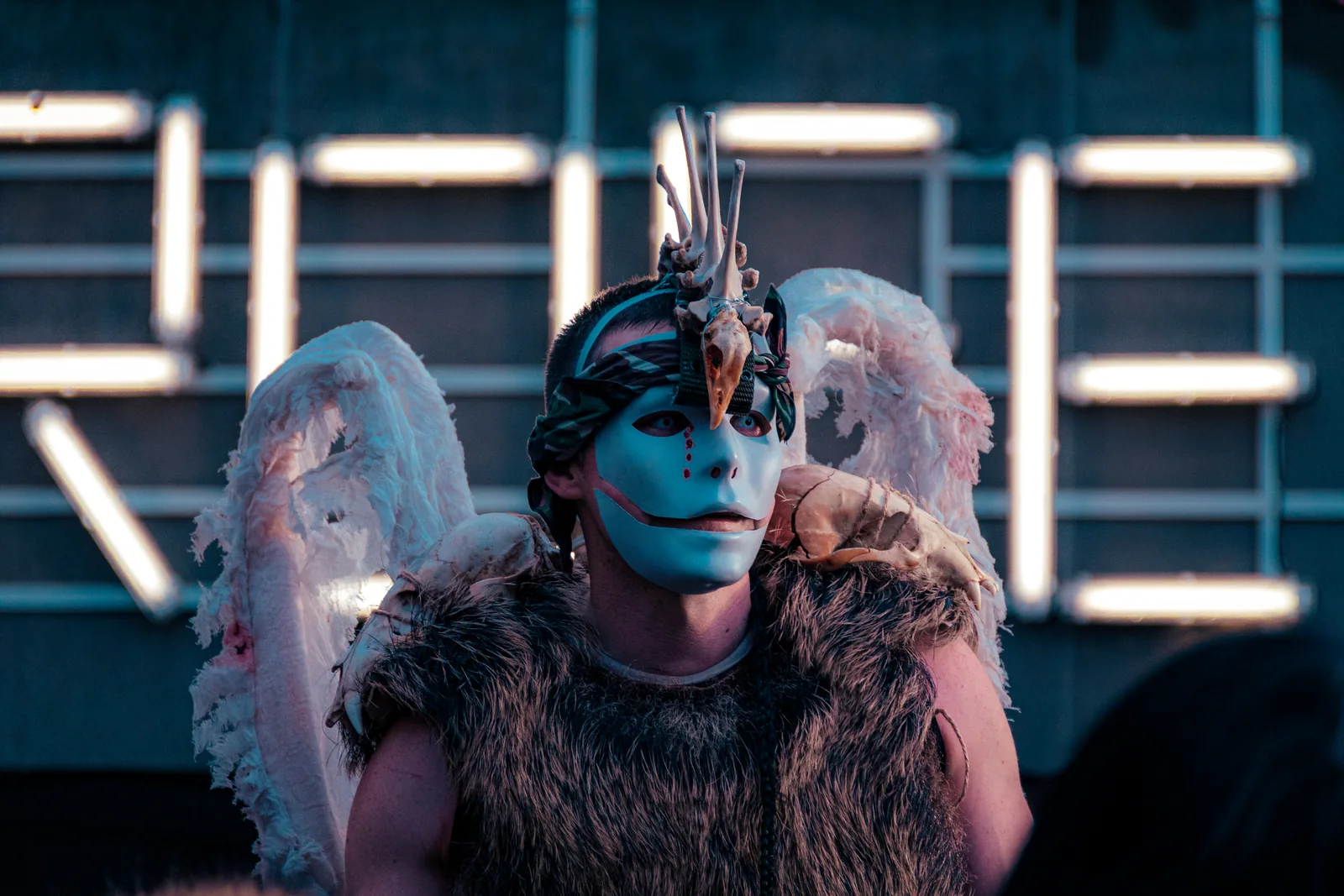
And I still like the images.
I like Canon's colors.
I also like the texture of the noise from this camera. I'm not trying to romanticize digital noise or pretend an old DSLR looks like film, but there is something less clinically clean about the files that I enjoy.
The sensor is 18 megapixels. On paper, that doesn't sound impressive anymore. In practice, for websites, social media and normal everyday use, it is more than enough.
The limitations also change the way I use it. With the Sony, I almost always compose using the rear screen. With the Canon, if I want the best autofocus performance it can give me, I go back to the optical viewfinder: camera to my face, physical controls, nine autofocus points. You have to understand what the camera is doing.
For someone learning photography, I think there is value in that. Not because using old technology automatically makes you a better photographer. It doesn't. But the 60D doesn't automate as much of the process for you, and it rewards you for understanding aperture, shutter speed, ISO, exposure and focus. It forces you to learn the basics because the camera can't hide them as easily.
So, would I recommend a Canon 60D in 2026?
That depends mostly on two things: what you want to do, and how much it costs.
Here in Japan, Canon 60Ds currently start at around ¥15,000 at Camera no Kitamura (roughly US$95 / R$500 at current exchange rates). You can sometimes find cheaper bodies on Mercari, Yahoo! Auctions and other online marketplaces. The advantage of buying from Kitamura is that used cameras are inspected and come with a small warranty, so you pay a little more for some extra peace of mind.
At those prices, I think it can be a great beginner camera. If your goal is to learn manual photography, experiment with interchangeable lenses and take good photos for personal use or social media, you can get a lot of camera for very little money.
At a higher price, the conversation changes. Once newer used cameras start appearing in the same price range, I would stop asking whether the Canon 60D is "still good" and ask what the person actually needs:
- Do you photograph movement?
- Do you need good low-light performance?
- Is video important?
- Do you care about touchscreen controls or subject tracking?
- Do you already own Canon EF or EF-S lenses?
An old camera can be a bargain. An overpriced old camera is just old.
I would still consider one if:
- Photography is your main priority.
- You want to learn manual controls.
- You mostly shoot static or slower subjects.
- You can buy one cheaply.
- You don't rely heavily on high ISO.
- Modern video features aren't important to you.
I would look elsewhere if:
- Video is a priority.
- You photograph sports, animals or fast movement.
- You want reliable tracking autofocus.
- You shoot frequently in low light.
- You want something small and lightweight.
- You want the conveniences of a modern mirrorless camera.
That's why I don't think the useful question is "Is the Canon 60D still good?"
The better question is:
“Still good for what?”
Mine found a new job instead of retiring
My Sony a6700 is now my main camera. If I'm leaving the house, that's probably what I'm taking.
So, logically, the Canon should have ended up in a drawer.
Instead, I put it on a tripod.
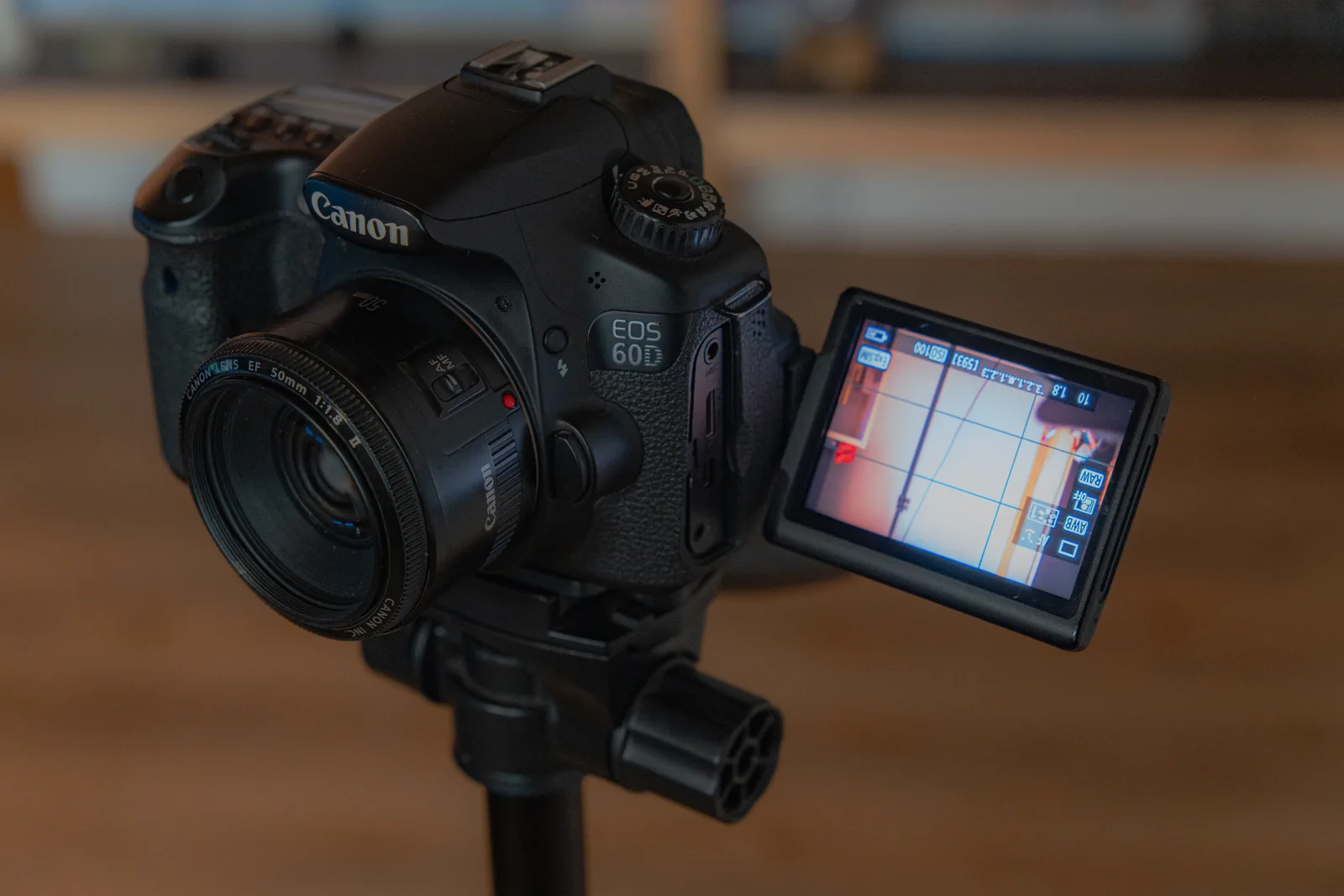
The 60D has already been recording video lessons and other content for years. Now it's going to stay permanently set up in my studio as the talking-head camera for my YouTube channel as I start taking that project more seriously.
In that environment, most of its weaknesses don't matter. I'll be sitting in roughly the same place, the distance to the camera barely changes, and the lighting is controlled. I don't need sophisticated subject tracking or a complicated color-grading workflow, and Full HD is enough for what I'm planning to produce.
More importantly, it means the Sony stays free. I can grab it and go photograph the dogs, record something outside or take it somewhere without dismantling my studio setup every time.
The Canon stays connected, configured and ready.
That convenience is useful enough to keep a fifteen-year-old camera working.
And then there is the part that has nothing to do with specifications
I've thought about selling the 60D before. That moment has passed. The money I would get for it isn't particularly meaningful anymore, it still serves a purpose, and after all these years I simply don't want to get rid of it.
I do this with some electronics. I still own an old desktop computer built around an Intel Core i7-2700K. I bought it in Brazil, upgraded it over time, took it to Canada and eventually brought it to Japan. I already own a MacBook Pro M3, and the old computer is still here.
The Canon belongs to the same category.
Some objects stay with you long enough that their value stops being purely technical.
This camera has been present through Brazil, Canada and Japan.
Drawing, photography, videos, teaching, and now another project is beginning with it sitting in the studio again.
I don't associate the 60D with one legendary photograph. It's more diffuse than that. It feels like a piece of equipment that has been around for a lot of my life.
Sometimes, even with the Sony available, I feel like using the Canon again.
There is no technical reason.
I just want to pick it up.
So I do.
If it broke tomorrow, would I buy another one?
No.
If repairing it stopped making sense, I would choose another camera to do its job. Maybe one day I would buy a 60D again simply to have one in the studio and remember this period. But another Canon 60D wouldn't really replace this one.
That's probably the difference that took me fifteen years to understand.
I'm not particularly attached to the Canon 60D as a model.
I'm attached to my Canon 60D.
As a product, technology passed it a long time ago. As a cheap camera for learning photography, it can still make a surprising amount of sense.
And as the camera that started with me in Brazil, moved to Canada, came to Japan and somehow keeps finding new jobs?
It isn't retired yet.
What about you? What's the oldest piece of gear you refuse to let go of? Tell me in the comments.
Want to know more about me and what I'm building? Visit the About page.